Permafrost under Observation
Instrumentation of Two Deep Boreholes in the Interior of the Kitzsteinhorn
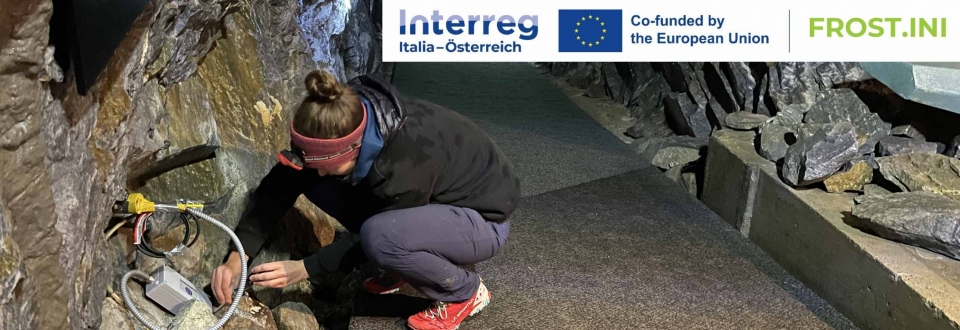
The instrumentation was made possible through the EU-funded FROST.INI project (Interreg VI-A Italy–Austria 2021–27). The Hanna-Stollen, which connects the northern and southern sides of the Kitzsteinhorn, provides unique access to the interior of the mountain. There, the sensors document temperature profiles inside the two boreholes, making thermal changes within the summit pyramid visible.
The new data will enable a more precise analysis of permafrost changes as a function of rock depth and slope apsect. Such information is rare, as only very few alpine monitoring sites provide data from multiple deep boreholes. With the resumption of measurements inside the Hanna Tunnel, the existing temperature time series is now being significantly expanded. The results provide important insights into slope and rock stability in the context of ongoing climatic warming — a key aspect for natural hazard management, infrastructure safety, and alpine tourism.
The newly instrumented boreholes inside the mountain have the potential to close an important scientific gap. While permafrost boreholes drilled from the ground surface are generally limited to a few tens of meters due to technical and economic constraints, the tunnel boreholes provide direct insights into thermal processes occurring in much deeper parts of the mountain. This makes it possible to better verify and validate existing conceptual models of the thermal dynamics of alpine permafrost bodies. In addition, the measurements allow researchers to investigate the role of heat transport through circulating fracture water at great depths and to assess how rapidly climate-related temperature signals penetrate into the mountain. In the long term, the measurements may also help to better estimate the overall thickness of alpine permafrost bodies and to assess their future evolution more precisely.
The first measurement results after six months demonstrate robust data acquisition with stable temperature profiles across all depths. Rock temperatures below 0 °C were continuously recorded from a depth of 4.7 m in borehole B4 and from 7.3 m depth in borehole B5.
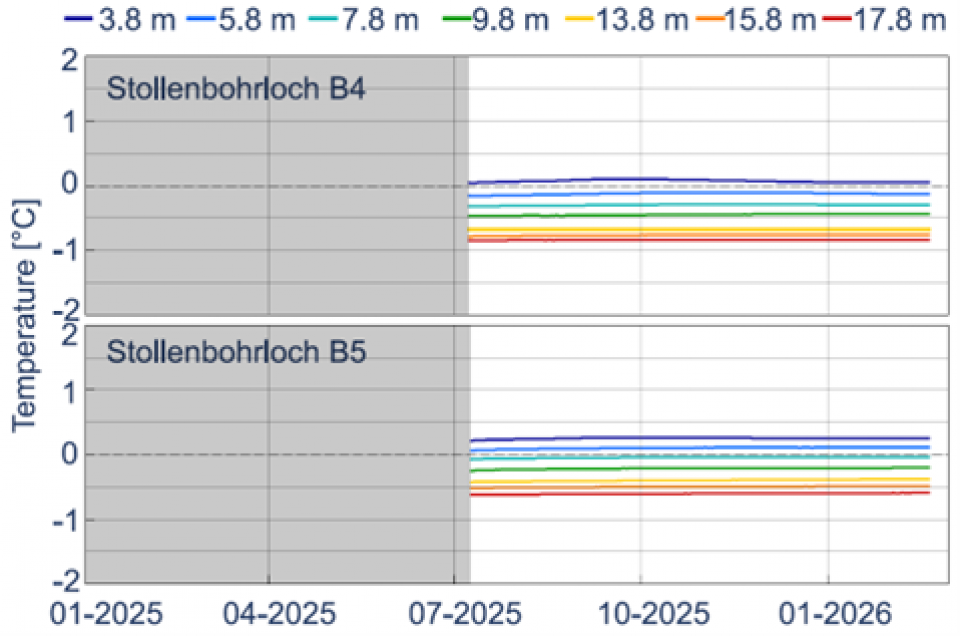
Figure 1: Initial measurements from the tunnel boreholes indicate stable temperature profiles, with rock temperatures remaining below 0 °C from depths of 4.7 m (B4) and 7.3 m (B5), respectively.
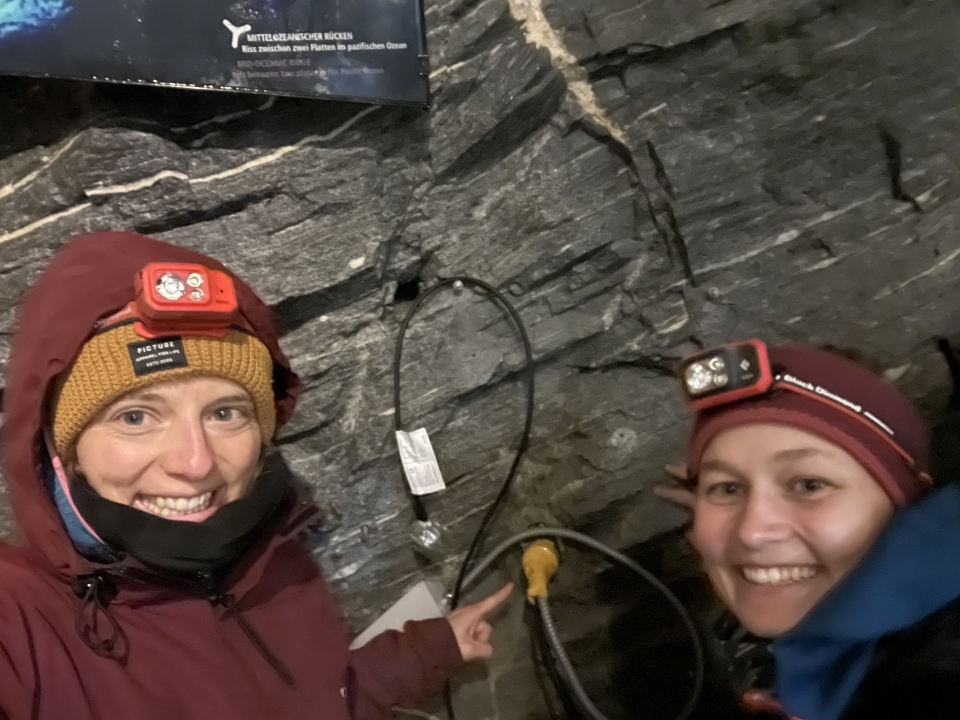
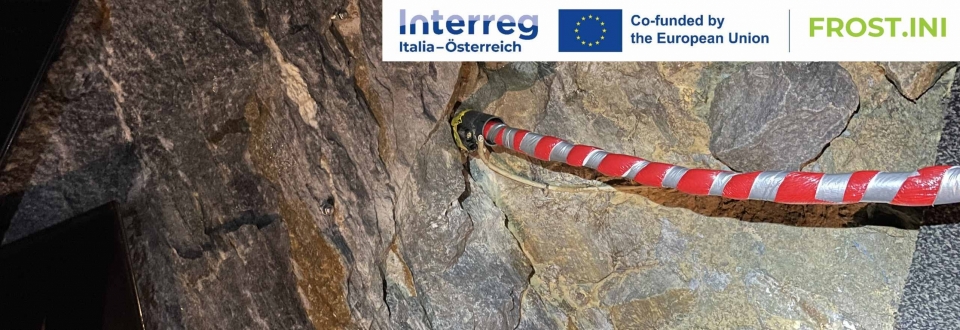
Figure 2: Successful instrumentation of the upper tunnel borehole (B4) on 9 July 2025